
Sunday, June 05, 2011
The way parents sometimes think...
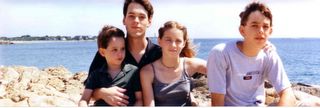
Found this old reverie in our hodgepodge of manila folders... and as grandparents it now holds true as ever...


Sunday, May 08, 2011
Canephoros: two snippets
In the face of reflections on 9/11, Bin Laden--scintillating clarity, comfort--from C.S. Lewis, from St. Augustine.

1. C. S. Lewis, after the Nazi invasion of Poland. University Church of St. Mary the Virgin at Oxford on October 22, 1939.
It may seem odd for us to carry on classes, to go about our academic routine in the midst of a great war. What is the use of beginning when there is so little chance of finishing? How can we study Latin, geography, algebra in a time like this? Aren't we just fiddling while Rome burns?
This impending war has taught us some important things. Life is short. The world is fragile. All of us are vulnerable, but we are here because this is our calling. Our lives are rooted not only in time, but also in eternity, and the life of learning, humbly offered to God, is its own reward. It is one of the appointed approaches to the divine reality and the divine beauty, which we shall hereafter enjoy in heaven and which we are called to display even now amidst the brokenness all around us.
2. St. Augustine, c. 400, in a world of siege from Alaric to the Vandal Genseric:
You are surprised that the world is losing its grip? That the world is grown old? Don’t hold onto the old man, the world; don’t refuse to regain your youth in Christ, who says to you: ‘The world is passing away; the world is losing its grip; the world is short of breath. Don’t fear, your youth shall be renewed as an eagle.’

1. C. S. Lewis, after the Nazi invasion of Poland. University Church of St. Mary the Virgin at Oxford on October 22, 1939.
It may seem odd for us to carry on classes, to go about our academic routine in the midst of a great war. What is the use of beginning when there is so little chance of finishing? How can we study Latin, geography, algebra in a time like this? Aren't we just fiddling while Rome burns?
This impending war has taught us some important things. Life is short. The world is fragile. All of us are vulnerable, but we are here because this is our calling. Our lives are rooted not only in time, but also in eternity, and the life of learning, humbly offered to God, is its own reward. It is one of the appointed approaches to the divine reality and the divine beauty, which we shall hereafter enjoy in heaven and which we are called to display even now amidst the brokenness all around us.
2. St. Augustine, c. 400, in a world of siege from Alaric to the Vandal Genseric:
You are surprised that the world is losing its grip? That the world is grown old? Don’t hold onto the old man, the world; don’t refuse to regain your youth in Christ, who says to you: ‘The world is passing away; the world is losing its grip; the world is short of breath. Don’t fear, your youth shall be renewed as an eagle.’
Saturday, March 19, 2011
C.S. Coon's poetic tribute to'Wild Bill' Donovan
On Learning of the death of
Wild Bill Donovan
Wild, people called him, who had heard of his fame
And wild he was in heart and in feyness
But more than wild was the man with the wile of Odysseus
Like the king of Assassins he welded together
An army of desperate, invisible soldiers
Each as bold as himself in single deeds
But none as keen as himself, the leader of all, commander of men
Who could ask, "Jim, will you limpet that ship?"
Knowing the answer, for none would refuse him, or
"Carl, a free ride to Albania?" "Yes? Then you're off,
Ten minutes to Zero," and we would all die for him.
Die for him some of us did, but he died for us all.
Some who are left would burn him whole, like a Viking jarl in his ship
Others would cover his bones with a colossal marble cross
Each to his taste, say I, Yankee, Irishman, Italian.
As many tombs will he have in our hearts as the scattered remains of Osiris,
How lucky we were that he came when he did in the long tide of history
Hail to Wild Bill, a hero of men and a name to hang myths on
As American as chowder, Crockett, and Putnam
A free fighter's hero, may God give him peace.
Carleton S Coon
June 2, 1959
Sunday, February 20, 2011
Valentine 2011
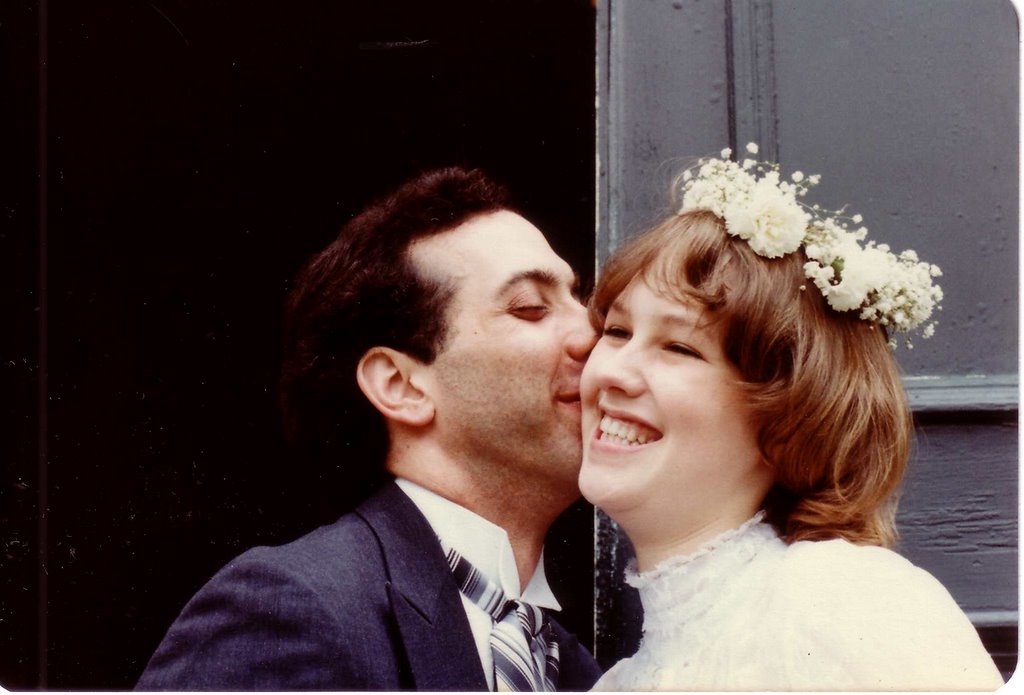
Another poem for my sweetheart...
Clear-eyed girl you were, deemed “too
tall”—talking to the old anthropologist
(later—unhinged—“she’s beautiful”
he’d creak) that summer afternoon,
radiant, your yellow ribbon
windblown—his shillelagh tapped
across the dappled granite pavers.
Astride a cascade of longing
and tethered in trust we’d danced
together nights before, anchored
in love. But that day (just perhaps)
some prescient windward flow
of breeze and heaven kept
blowing us together and (unrelenting
as love) enlivened us that day, now.
Later that year we’d marry, then hop
into the Coronet (you still in your wedding
dress) to tell our love to him bedside
as he lay dying. In sickness and health,
through sweet and sour, a girl’s clear-eyed
constancy still persists and nourishes: the love
we’ve shared—once fumbling at words, waistbands
wedding prayers—rises tall, thriving with mercy.
Thursday, December 30, 2010

Saturday, December 18, 2010
It Came Upon The Midnight Clear
Christmastide artifact from 1996--it's fun to hear again--the kids were troopers, singing their hearts out.
Saturday, November 06, 2010
Wonderfully made: Madeline Phuong Lovell
Sean & Duyen's baby girl born NYC 5 November 2010--19 3/4 inches, 6 pounds, 15 oz--here are a few birthday photos. What a sweetie!--fearfully and wonderfully made!


Tuesday, November 02, 2010
C.S. Lewis' "Adoration in infinitesimals"

Ansel Adams: Tenaya Creek, Dogwood, Rain. Yosemite, c. 1948
One must learn to walk before one can run... We--or at least I--shall not be able to adore God on the highest occasions if we have learned no habit of doing so on the lowest. At best, our faith and reason will tell us that He is adorable, but we shall not have found Him so, not have "tasted and seen." Any patch of sunlight in a wood will show you something about the sun which you could never get from reading books on astronomy. These pure and spontaneous pleasures are "patches of Godlight" in the woods of our experience.
--C.S. Lewis, Letters to Malcolm: Chiefly on Prayer, 1964, p.91
Wednesday, June 16, 2010
Lanesville: a personal (and rambling) appreciation
(This appeared in our local paper, 4 June 2010: here.)

Every year around our anniversary—in belilaced mid-May—my wife and I remember our Lanesville wedding. This year marked our 29th—and memories during this season become incredibly palpable as we walk and drive hither thither around Lanesville, Annisquam, Rockport: a young couple standing there exchanging vows in the church—then (and now) not at all sure what the future held—the window glass clattering in the long windows, the lilacs cut and stuffed in altar vases—my brother and I picking lilies-of-the-valley that morning, winding them into boutonnières with masking tape. I remember Gordon Hugenberger reading how "love keeps no record of wrongs" before the magnificent Vera Cheves played the recessional and we all tumbled downstairs to the tiny vestry for wedding cake and goodies.
We have loved this church from the moment we first worshipped there—it has always had a parish community feel to it. As a young couple new to this Gloucester community Allison and I experienced enormous kindness year after year from families with names like Ahola, Erkilla, Larsen, Macdonald, Gertsner, Aspesi, Haselgard, Craaybeek, Jacobsen, and others. Such marvelous people—the older we get the more these names and memories now become touchstones to us, witnesses to charming lives full of beauty, persistence through hard times, trusting at every turn the God they loved.
As it still does, the place absolutely amazed us then—there was the Lanesville Barnacle Bazaar and Ladies Aid, quarries and pit parties, pig roasts and parades. We remember Sylvester Ahola standing with Saima in their lovely home playing a private fanfare to our wedding. Or the troubled Mildred Muncie praying in church a rambling, inchoate prayer that somehow managed to burst into expansive praise and enormous beauty as it considered everything from starlings to starfields. As a young man I did odd jobs for older folks like Viola Ray, Mardie or Clifton Macdonald, Fannie Jacobsen and others who so appreciated every occasional task I could help with—Lanesvillean graciousness inevitably incorporating tea, coffee, cookies, nisu! A carpentry job might involve keeping an eye on the small fry in the home— Gordon and Jane Hugenberger would then walk hand-in-hand to the old Firehouse for a quick coffee together—but I ramble: these vignettes simply inform this sketch of church and community largely knit together, year after year.
This church—the place and the people—has been in so many ways the heart of our family: many of the most treasured heartfelt aspects of our lives are rooted there—joyous weddings and christenings, the grievous deaths of loved ones—some so very tragic—the play of children, the deep, arresting, practical wisdom of elderfolk—all this wrapped in deep compassion and worship, the beauty of music and song, the heartening, honest, human talk of men and women, young and old, over tea and coffee, in a quiet corner at church or chatting outside while the kids laughed and played.
This throng comes from Lanesville, Annisquam, West Gloucester, Rockport and other towns nearby. Our families and our deepest friendships have ranged across the entire community spectrum: public school teachers, university professors, fishermen, engineers, mechanics, carpenters and electricians and plumbers, cabinetmakers, attorneys, economists, anthropologists, booksellers, antique dealers, writers and musicians of all stripes—the list goes on. We share together our common griefs, joys and worries as we go (sometimes muddling) day by day, yearning somehow to live more and more like Jesus lived.
From my vantage the neighborhoods and community that have historically enfolded Lanesville and the Lanesville Congregational church have always championed a tolerance in community far removed from all things narrow and disquietingly insular. The village of Lanesville is a beautifully unique, spirited place—it’s somewhat fitting that this church reflect that eclectic spirit.
My wife Allison's Oklahoman father used to drawl that "an apple don't fall too far from the tree". And so it is that Lanesville, generation after generation, has nurtured some vibrant, thriving churches—and this particular church has for centuries now been no exception. This church's own eclecticism is testimony to this vital village community as well as to God's spirit reaching across all boundaries, drawing us as a community together, with hearts fully engaged in mercy, forgiveness, love.
John and Allison Lovell
Rockport, Ma.
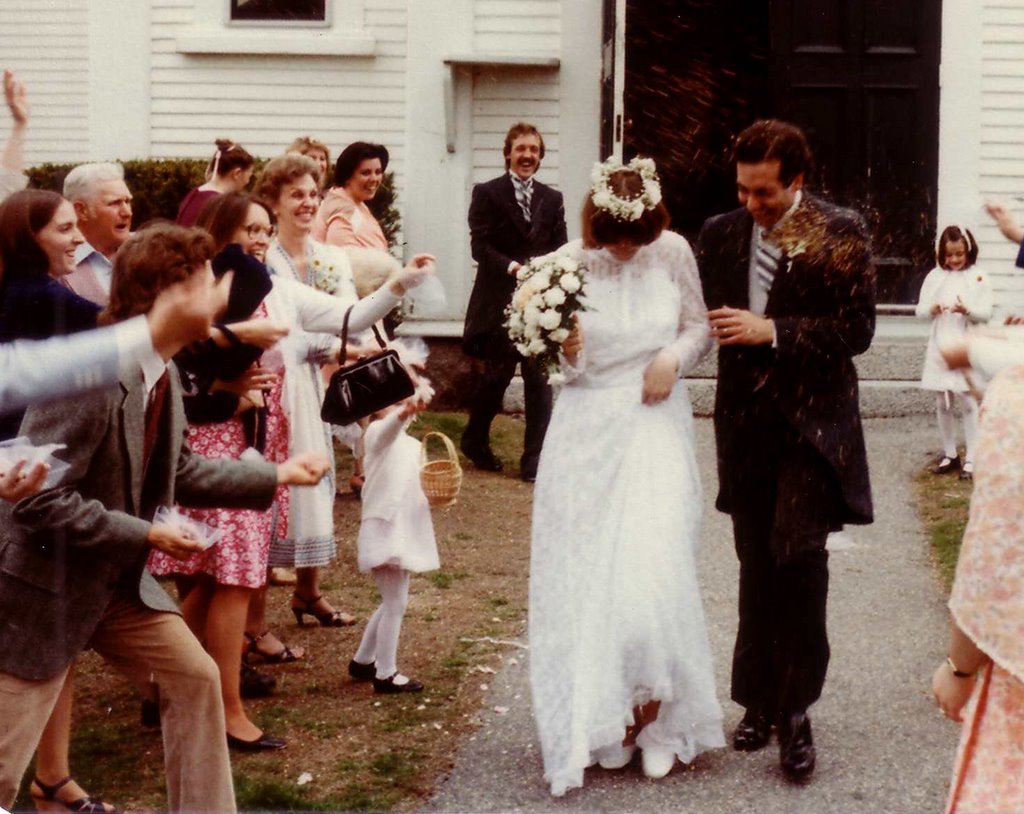
Every year around our anniversary—in belilaced mid-May—my wife and I remember our Lanesville wedding. This year marked our 29th—and memories during this season become incredibly palpable as we walk and drive hither thither around Lanesville, Annisquam, Rockport: a young couple standing there exchanging vows in the church—then (and now) not at all sure what the future held—the window glass clattering in the long windows, the lilacs cut and stuffed in altar vases—my brother and I picking lilies-of-the-valley that morning, winding them into boutonnières with masking tape. I remember Gordon Hugenberger reading how "love keeps no record of wrongs" before the magnificent Vera Cheves played the recessional and we all tumbled downstairs to the tiny vestry for wedding cake and goodies.
We have loved this church from the moment we first worshipped there—it has always had a parish community feel to it. As a young couple new to this Gloucester community Allison and I experienced enormous kindness year after year from families with names like Ahola, Erkilla, Larsen, Macdonald, Gertsner, Aspesi, Haselgard, Craaybeek, Jacobsen, and others. Such marvelous people—the older we get the more these names and memories now become touchstones to us, witnesses to charming lives full of beauty, persistence through hard times, trusting at every turn the God they loved.
As it still does, the place absolutely amazed us then—there was the Lanesville Barnacle Bazaar and Ladies Aid, quarries and pit parties, pig roasts and parades. We remember Sylvester Ahola standing with Saima in their lovely home playing a private fanfare to our wedding. Or the troubled Mildred Muncie praying in church a rambling, inchoate prayer that somehow managed to burst into expansive praise and enormous beauty as it considered everything from starlings to starfields. As a young man I did odd jobs for older folks like Viola Ray, Mardie or Clifton Macdonald, Fannie Jacobsen and others who so appreciated every occasional task I could help with—Lanesvillean graciousness inevitably incorporating tea, coffee, cookies, nisu! A carpentry job might involve keeping an eye on the small fry in the home— Gordon and Jane Hugenberger would then walk hand-in-hand to the old Firehouse for a quick coffee together—but I ramble: these vignettes simply inform this sketch of church and community largely knit together, year after year.
This church—the place and the people—has been in so many ways the heart of our family: many of the most treasured heartfelt aspects of our lives are rooted there—joyous weddings and christenings, the grievous deaths of loved ones—some so very tragic—the play of children, the deep, arresting, practical wisdom of elderfolk—all this wrapped in deep compassion and worship, the beauty of music and song, the heartening, honest, human talk of men and women, young and old, over tea and coffee, in a quiet corner at church or chatting outside while the kids laughed and played.
This throng comes from Lanesville, Annisquam, West Gloucester, Rockport and other towns nearby. Our families and our deepest friendships have ranged across the entire community spectrum: public school teachers, university professors, fishermen, engineers, mechanics, carpenters and electricians and plumbers, cabinetmakers, attorneys, economists, anthropologists, booksellers, antique dealers, writers and musicians of all stripes—the list goes on. We share together our common griefs, joys and worries as we go (sometimes muddling) day by day, yearning somehow to live more and more like Jesus lived.
From my vantage the neighborhoods and community that have historically enfolded Lanesville and the Lanesville Congregational church have always championed a tolerance in community far removed from all things narrow and disquietingly insular. The village of Lanesville is a beautifully unique, spirited place—it’s somewhat fitting that this church reflect that eclectic spirit.
My wife Allison's Oklahoman father used to drawl that "an apple don't fall too far from the tree". And so it is that Lanesville, generation after generation, has nurtured some vibrant, thriving churches—and this particular church has for centuries now been no exception. This church's own eclecticism is testimony to this vital village community as well as to God's spirit reaching across all boundaries, drawing us as a community together, with hearts fully engaged in mercy, forgiveness, love.
John and Allison Lovell
Rockport, Ma.
Friday, April 23, 2010


Monday, March 22, 2010
Old photos
Fun old photos, from Uncle Doug...
...of the two of us, c. 1983:

...and of darlin' Allison in Dallas, age 13:

...of the two of us, c. 1983:

...and of darlin' Allison in Dallas, age 13:

Sunday, March 07, 2010
Wicked Winter flows into softer Spring
(A delightful poem by a friend of ours.)
Wicked Winter flows into softer Spring,
not change for loss, but growth;
A constant circuit of renewal-repose.
While the sun, only a shadow of its Creator,
seeps through solid ground
To disquiet all that rests.
Whether by blanket of mist, rain or snow,
the smallest creatures are not forgotten
In sweet balance of diversity-fidelity.
And I in my pulsing chamber
am not much different
But to possess the gift of reason.
A gift or a curse?
I will not argue but rather submit
To every blessed pain-pleasure of growth.
-Jane Lucia Erikson, 1972
Wicked Winter flows into softer Spring,
not change for loss, but growth;
A constant circuit of renewal-repose.
While the sun, only a shadow of its Creator,
seeps through solid ground
To disquiet all that rests.
Whether by blanket of mist, rain or snow,
the smallest creatures are not forgotten
In sweet balance of diversity-fidelity.
And I in my pulsing chamber
am not much different
But to possess the gift of reason.
A gift or a curse?
I will not argue but rather submit
To every blessed pain-pleasure of growth.
-Jane Lucia Erikson, 1972
Right me up: "...your love stands firm forever..."
On our vacation last year to visit our wonderful family in Wisconsin, we grew fond of this song, State Radio's "Right Me Up"...
And then I happened across this sermon by Chris Taylor, referencing the song--and it seems to capture what first attracted us to the song.
Right Me Up
And then I happened across this sermon by Chris Taylor, referencing the song--and it seems to capture what first attracted us to the song.
Right Me Up
Wednesday, February 24, 2010
Valentine, 2010
A poem for my best friend. Twenty-nine years ago, Allison and I announced our engagement--on Valentine's Day, 1981.
We've always loved Robert Frost's poem "Directive" and its first line's spare (honest, meager) framework ("back out of all this now too much for us")--upon which the poem below builds, remembering how God carries us.

Valentine, 2010
Beyond your eyes, graced green
and dazzling beyond all spectrums,
comfort comes (in your words, in your laughter) and always, always,
kindness cascades through your love--too, too
often ignored, assumed, a luxury always lavished
upon this family, this man,
this lustrous life we have together. Magnificence,
opulence like this--how were we so blessed?--our prayers
festooned this love from the get-go: garlands of gladsome
amens, heartsick sighs, woeful worries, hushed hallelujahs.
Let's two together remember our only hope (from the beginning
lifting us when we were leveled, afflicted, careless)--that nothing
thoroughly planned out, not the most beneficent strategy
had much success apart from the Love that carried us
in far stronger arms always, always.
So my darling--whose beauty, voice, and grace glances
now like light against everything in my world (my dreams,
our talk, this family, our prayers)--here's praise for you,
winnowing beauty somehow from even drab, shabby days,
tenderly easing children's hurts, bearing more than beauty
ought to bear--carrying, being carried--always, always.
One time long ago we sang out full-throated hymns to heaven's
music and mercy--we danced for a moment--we yearned, yearned together
upon a crag in a seaside meadow, laughing heavenward that night and
chattering from a chalice of hope, uncertain the days ahead.
How I love you, I said: your eyes, your voice. How I love you
forever now I say: a friend fashioned like no other, no
other--a mystery to me even now, brimming with delight and laughter,
radiant, heartening--your breath twinned to my breath, hopes pinned
upon each other's hope in a Strength carrying us together,
singing love songs, lullabies, victory hymns forever, forever.
We've always loved Robert Frost's poem "Directive" and its first line's spare (honest, meager) framework ("back out of all this now too much for us")--upon which the poem below builds, remembering how God carries us.

Valentine, 2010
Beyond your eyes, graced green
and dazzling beyond all spectrums,
comfort comes (in your words, in your laughter) and always, always,
kindness cascades through your love--too, too
often ignored, assumed, a luxury always lavished
upon this family, this man,
this lustrous life we have together. Magnificence,
opulence like this--how were we so blessed?--our prayers
festooned this love from the get-go: garlands of gladsome
amens, heartsick sighs, woeful worries, hushed hallelujahs.
Let's two together remember our only hope (from the beginning
lifting us when we were leveled, afflicted, careless)--that nothing
thoroughly planned out, not the most beneficent strategy
had much success apart from the Love that carried us
in far stronger arms always, always.
So my darling--whose beauty, voice, and grace glances
now like light against everything in my world (my dreams,
our talk, this family, our prayers)--here's praise for you,
winnowing beauty somehow from even drab, shabby days,
tenderly easing children's hurts, bearing more than beauty
ought to bear--carrying, being carried--always, always.
One time long ago we sang out full-throated hymns to heaven's
music and mercy--we danced for a moment--we yearned, yearned together
upon a crag in a seaside meadow, laughing heavenward that night and
chattering from a chalice of hope, uncertain the days ahead.
How I love you, I said: your eyes, your voice. How I love you
forever now I say: a friend fashioned like no other, no
other--a mystery to me even now, brimming with delight and laughter,
radiant, heartening--your breath twinned to my breath, hopes pinned
upon each other's hope in a Strength carrying us together,
singing love songs, lullabies, victory hymns forever, forever.
Tuesday, January 19, 2010
Ione Shaw Lovell, 1921 - 2010

LAGUNA WOODS — Ione LaCygne (Coats) Shaw Lovell, 88, wife of the late Robert Calvin Lovell, died peacefully at home on Friday, Jan. 15, 2010 surrounded by her family. Before retiring to Laguna Woods, Ione lived many years in South Pasadena and Glendale, CA, and earlier in Suncook, NH.
She was born in Los Angeles on Dec. 11, 1921, the daughter of Kenneth S. Coats, and Mabel D. (Loberg) Coats. Ione grew up in Highland Park, CA, graduating from Franklin High School.
She found satisfaction for many years working in the travel industry, for many years owning and operating the Exodus/Argosy Travel agency in Glendale. Earlier she managed her own flower shop in Suncook, NH. As a young woman, she worked successfully as a photographers model, and at Lockheed during WWII.
Ione was a longtime member of Lake Avenue Congregational Church, Pasadena, and later Grace Hills Chapel, Laguna Woods. She was for many years president of the Soroptimist International Glendale club. She was a member of the Christian Wheelers club, enjoying the adventure of camping and the club's camaraderie.
In her spare time she enjoyed crocheting, reading, and graciously entertaining friends and neighbors in her home. She loved animals, and the beauty of nature--all strays were nurtured in her home. In earlier times she was active as a young Republican, and continued to enjoy spirited political conversations in later years--often with her grandchildren.
Ione will be remembered as a beloved mother, grandmother, sister, aunt and friend to her family and friends around the country--from New England to Wisconsin to California. Ione remains treasured by so many of our related families: the extended Lovell, Coats, Shaw, Cunningham, Torres, Rohrer, and Simcox families.
In addition to her husband Robert, she was predeceased in 1951 by her beloved first husband, Roger Tolles Shaw.
She is survived by her brother, Leighton Coats and wife Joanne; her three children, Robert Shaw and companion Kay McCann of Las Vegas, NV, James Lovell and wife Sheryl of Fountain Valley, CA, John Lovell and wife Allison of Rockport, MA; and four grandchildren, Sean Lovell and wife Duyen, Cameron Lovell, Jessie Lovell, and Robert Lovell; and friend Nobuko Yamanobe, beloved as a daughter.
Shorter copies of this obituary can be found posted at the Los Angeles Times and the Orange County Register through February.
Wednesday, December 23, 2009
Sing lullaby...
A wonderful Basque carol (Douze Noëls populaires en dialecte souletin, 1895), paraphrased Sabine Baring-Gould (1834-1924)
The Infant King
Sing lullaby!
Lullaby baby, now reclining,
sing lullaby!
Hush, do not wake the infant King.
Angels are watching, stars are shining
over the place where He is lying:
sing lullaby!
Sing lullaby!
Lullaby baby, now a-sleeping,
sing lullaby!
Hush, do not wake the infant King.
Soon will come sorrow with the morning,
soon will come bitter grief and weeping:
sing lullaby!
Sing lullaby!
Lullaby baby, now a-dozing,
sing lullaby!
Hush, do not wake the infant King.
Soon comes the cross, the nails, the piercing,
then in the grave at last reposing;
sing lullaby!
Sing lullaby!
Lullaby! is the babe awaking?
Sing lullaby!
Hush, do not stir the infant King.
Dreaming of Easter, gladsome morning.
conquering death, its bondage breaking:
sing lullaby!
Saturday, December 19, 2009
Hardship
I'm not entirely enamored with some of President Obama's initiatives, policies--but do love this remark from 2007:
"I take away the compelling idea that there’s serious evil in the world, and hardship and pain. And we should be humble and modest in our belief we can eliminate those things. But we shouldn’t use that as an excuse for cynicism and inaction. I take away the sense we have to make these efforts knowing they are hard, and not swinging from naïve idealism to bitter realism..."
This reminds me of the honesty and hopefulness in Jesus' words:
"In this world you have many troubles. But don't be afraid: I have overcome the world."
John 16:33
"I take away the compelling idea that there’s serious evil in the world, and hardship and pain. And we should be humble and modest in our belief we can eliminate those things. But we shouldn’t use that as an excuse for cynicism and inaction. I take away the sense we have to make these efforts knowing they are hard, and not swinging from naïve idealism to bitter realism..."
This reminds me of the honesty and hopefulness in Jesus' words:
"In this world you have many troubles. But don't be afraid: I have overcome the world."
John 16:33
Saturday, December 12, 2009
California, 1963: Wisps of age
A terribly double-exposed and poorly transferred video of graduation day at El Centro Elementary, June 1963--a remnant/artifact providing just a wisp of that day--Mr. Edgar our principal, the ceremonial ringing of the bell by students, etc.
The clip also has the images of my family & cousins swimming in Wisconsin on our family vacation later that summer, cavorting in the lake, sliding down the waterslide--the conflation of happy memories, and the beginning of my father's nearly predictable tendency to double-exposure...
Given its poor quality it's best viewed in large format...
The soundtrack is 'Massasoit' penned in 2003 in honor of one of the most magnificent, courageous and beloved friends ever--Dan Swensen. (A tribute to Danny as beloved professor, here.)


The clip also has the images of my family & cousins swimming in Wisconsin on our family vacation later that summer, cavorting in the lake, sliding down the waterslide--the conflation of happy memories, and the beginning of my father's nearly predictable tendency to double-exposure...
Given its poor quality it's best viewed in large format...
The soundtrack is 'Massasoit' penned in 2003 in honor of one of the most magnificent, courageous and beloved friends ever--Dan Swensen. (A tribute to Danny as beloved professor, here.)


Tuesday, December 08, 2009
Elizabeth Bishop's Sestina
When son Cameron was in 4th grade, Cam asked teacher Mrs. Gray if his dad could share this lovely poem with the class.
Thanks to the esteemed Donna Gray's invitation, I soon witnessed a class remarkable for its depth of insight, its delight in the sestina structure--we seemed to talk about its meaning forever. An absolutely delightful poem--can't wait to share it with grandchildren, insha'allah!

Elizabeth Bishop
Sestina
Elizabeth Bishop, 1956
September rain falls on the house.
In the failing light, the old grandmother
sits in the kitchen with the child
beside the Little Marvel Stove,
reading the jokes from the almanac,
laughing and talking to hide her tears.
She thinks that her equinoctial tears
and the rain that beats on the roof of the house
were both foretold by the almanac,
but only known to a grandmother.
The iron kettle sings on the stove.
She cuts some bread and says to the child,
It's time for tea now; but the child
is watching the teakettle's small hard tears
dance like mad on the hot black stove,
the way the rain must dance on the house.
Tidying up, the old grandmother
hangs up the clever almanac
on its string. Birdlike, the almanac
hovers half open above the child,
hovers above the old grandmother
and her teacup full of dark brown tears.
She shivers and says she thinks the house
feels chilly, and puts more wood in the stove.
It was to be, says the Marvel Stove.
I know what I know, says the almanac.
With crayons the child draws a rigid house
and a winding pathway. Then the child
puts in a man with buttons like tears
and shows it proudly to the grandmother.
But secretly, while the grandmother
busies herself about the stove,
the little moons fall down like tears
from between the pages of the almanac
into the flower bed the child
has carefully placed in the front of the house.
Time to plant tears, says the almanac.
The grandmother sings to the marvelous stove
and the child draws another inscrutable house.
Thanks to the esteemed Donna Gray's invitation, I soon witnessed a class remarkable for its depth of insight, its delight in the sestina structure--we seemed to talk about its meaning forever. An absolutely delightful poem--can't wait to share it with grandchildren, insha'allah!

Elizabeth Bishop
Sestina
Elizabeth Bishop, 1956
September rain falls on the house.
In the failing light, the old grandmother
sits in the kitchen with the child
beside the Little Marvel Stove,
reading the jokes from the almanac,
laughing and talking to hide her tears.
She thinks that her equinoctial tears
and the rain that beats on the roof of the house
were both foretold by the almanac,
but only known to a grandmother.
The iron kettle sings on the stove.
She cuts some bread and says to the child,
It's time for tea now; but the child
is watching the teakettle's small hard tears
dance like mad on the hot black stove,
the way the rain must dance on the house.
Tidying up, the old grandmother
hangs up the clever almanac
on its string. Birdlike, the almanac
hovers half open above the child,
hovers above the old grandmother
and her teacup full of dark brown tears.
She shivers and says she thinks the house
feels chilly, and puts more wood in the stove.
It was to be, says the Marvel Stove.
I know what I know, says the almanac.
With crayons the child draws a rigid house
and a winding pathway. Then the child
puts in a man with buttons like tears
and shows it proudly to the grandmother.
But secretly, while the grandmother
busies herself about the stove,
the little moons fall down like tears
from between the pages of the almanac
into the flower bed the child
has carefully placed in the front of the house.
Time to plant tears, says the almanac.
The grandmother sings to the marvelous stove
and the child draws another inscrutable house.
Saturday, December 05, 2009
Uncle Bobby
Just home from two weeks in Laguna with family which causes us to reflect on the blessing that family is. Here's a photo of Uncle Bobby with Cam & Jessie, Wheelers' Point, Gloucester, Massachusetts, 1992.


Subscribe to:
Posts (Atom)